
Tamarix chinensis

Tamaricaceae
Tamarix aphylla ‘Erect’

Tamaricaceae
Tamarix aphylla

Tamaricaceae
Enterolobium cyclocarpum

Fabaceae (Mimosaceae)
Erythrina corallodendron

Fabaceae (Papilionaceae)
Erythrina crista-galli

Fabaceae (Papilionaceae)
Erythrina indica

Fabaceae (Papilionaceae)
Quercus calliprinos

Fagaceae
Quercus virginiana

Fagaceae
Quercus ithaburensis
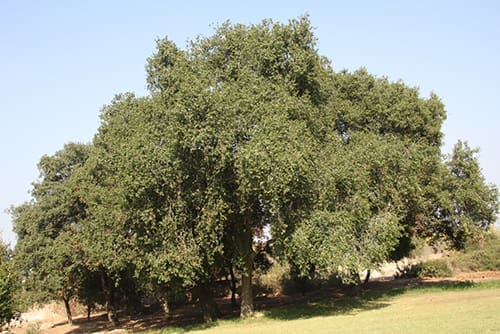
Fagaceae
Quercus suber
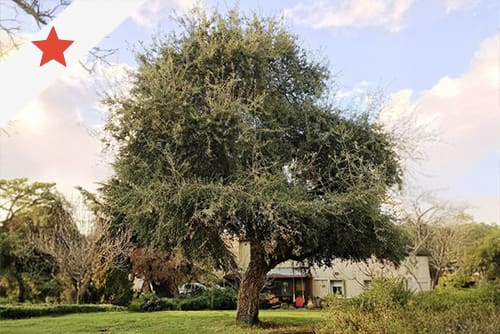
Fagaceae
Quercus ilex

Fagaceae
Quercus robur ‘Fastigiata’

Fagaceae
Quercus robur
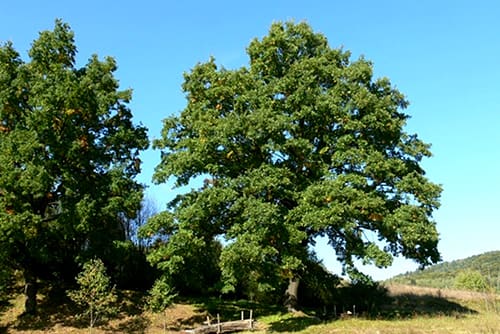
Fagaceae
Pistacia chinensis

Anacardiaceae
Pistacia palaestina

Anacardiaceae
Pistacia atlantica

Anacardiaceae
Albizia lebbeck
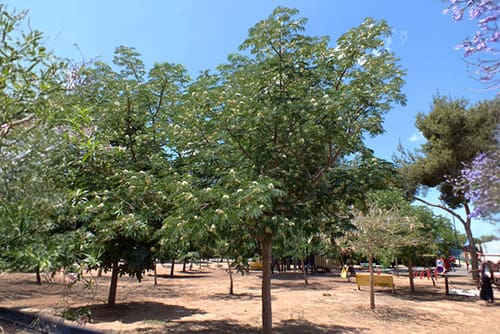
Fabaceae (Caesalpinioideae)
Albizia julibrissin

Fabaceae (Caesalpinioideae)
Corymbia citriodora

Myrtaceae
Corymbia torelliana (cadaghi)
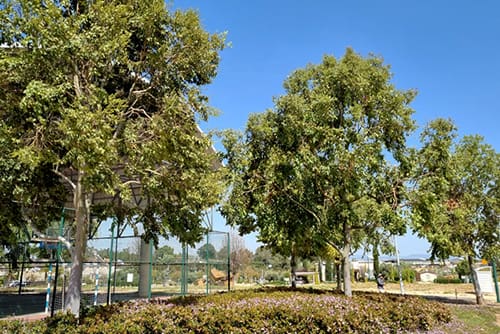
Myrtaceae
Eucalyptus camaldulensis

Myrtaceae
Eucalyptus deglupta
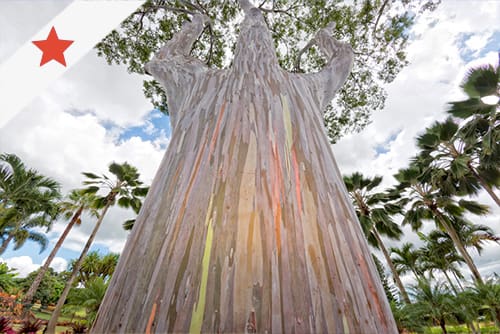
Myrtaceae
Inga vera
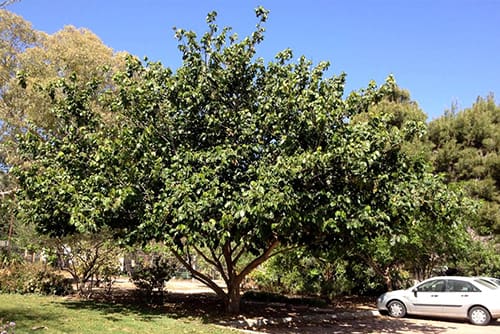
Fabaceae (Papilionaceae)
Pinus pinea (stone pine)

Pinaceae
Acer obtusifolium

Aceraceae
Pyrus calleryana ‘Aristocrat’

Rosaceae<
Pyrus calleryana

Rosaceae
Platanus acerifolia ‘Yuval’ (Platanus occidentalis)
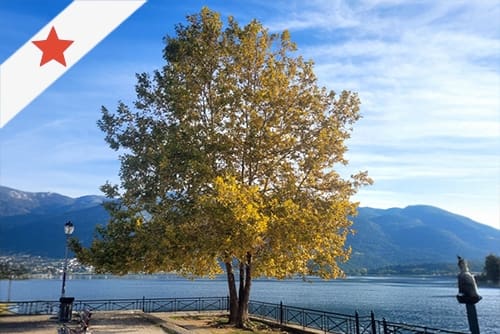
Platanaceae
Ginkgo biloba

Ginkgoaceae
Adansonia digitate

Malvaceae
Agonis flexuosa

Myrtaceae
Old street trees with the patchwork method

Old trees have great value as street trees. With them, qualities that only develop after years of growth and establishment are manifested: the mature appearance, the dimensions of the canopy, spectacular flowers etc. They have already gone through the difficulties in adapting and other phenomena that characterize young trees. However, it’s wrong to insist on them. When it is not possible to realize the benefits of the tree and enjoy its full potential, then the right thing to do is give up and replace it.
Evergreens as street trees in Israel
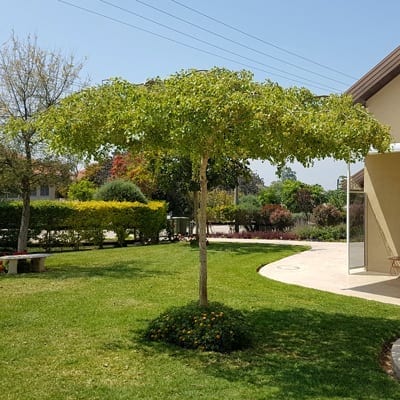
There is a preference in our tiny country to beautify the streets with evergreen trees. This ambition is for those that grow quickly. However, most of those that meet these two criteria (evergreen and fast-growing) are not necessarily the best suited to be street trees. This article addresses the common problems, proposes how to improve and optimize the existing solutions and even offers new solutions, the fruits of the nursery’s cultivation.
Instant culture and Israeli trees

The Talmud tells the story of the scholar Honi HaMe’agel who saw a man planting a carob tree. He expressed astonishment because it would be years before the tree would bear fruit, and it was uncertain whether the planter would live long enough to enjoy it. For a moment, Honi seems to us to be representative of “instant culture” – as a representative of the standard of the twenty-first century who traveled back in time. And that planter is someone we have identified as someone who makes a high-quality, long-term investment
Ornamental tree nursery – on the concept of specialization and focus

If we have extensive growing areas and skilled personnel, then why not expand our practice from ornamental trees to additional nursery products? We believe in the power of specialization and focus. And when it comes to trees, this is even more crucial. A tree lives dozens and hundreds of years. The depth of a nurseryperson’s knowledge of trees should be based on long-term research and observations and on knowledge accumulated over long periods of time