Share:
Share:
Origin: Australia
Description: Deciduous
Canopy Shape: Columnar-upright
Bloom: No horticultural significance
Height at Maturity: 7 – 10 meters or 22.9 – 32.8
Diameter at Maturity: 2 – 3 meters or 6.5 – 9.8
Growing Speed: Moderate
Irrigation: Regular irrigation required
Soil: Prefers non-calcareous (chalk-free), deep, and moist soil; avoid prolonged waterlogging
Geographical Distribution: All regions across the country except the Jordan Valley and the Arava
Climatic Adaptability: Cold- and frost-tolerant; sensitive to dry conditions
Primary Uses: Specimen tree, traffic median, park, and avenue

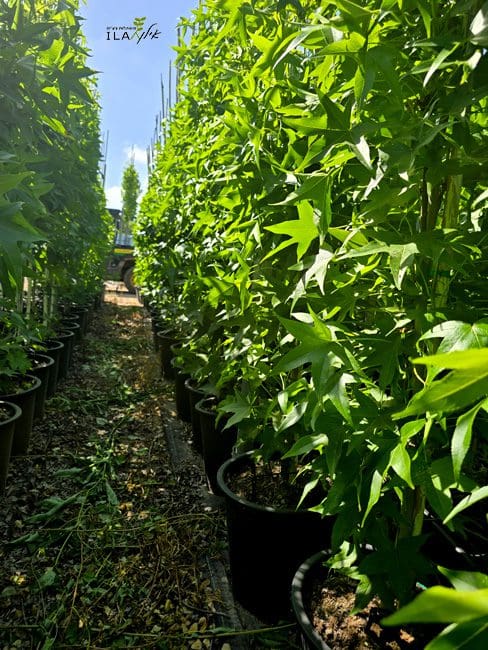
Our nursery is proud to introduce a unique, grafted fastigiate cultivar: the Fastigiate Sweetgum Liquidambar styraciflua ‘Shavit’. This is a magnificent deciduous tree with an upright columnar growth habit, selected and developed in Australia for its structured silhouette and extraordinary fall color. It is uniquely suited for planting in styled gardens, urban avenues, and space-constrained areas where an exceptionally narrow tree profile is required. Within a decade of planting, the tree reaches a height of 7 to 10 meters with an average spread of roughly 2 meters, maintaining a compact and impressive structure.
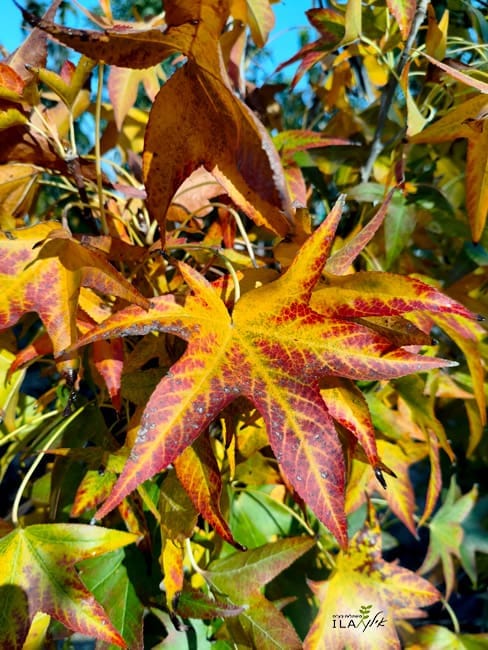
The tree’s foliage is one of its most striking features: large, star-shaped leaves with 5 to 7 serrated lobes emerge in spring in a glossy, dark green hue. With the arrival of autumn, the foliage transforms dramatically into vivid displays of yellow, orange, and reddish-purple. While color intensity depends on soil quality, moisture levels, and local microclimate, this cultivar has a reputation for exceptionally intense and reliable fall foliage, even in relatively warm regions. For optimal performance, plant in full sun in deep, moist, well-drained soil that is slightly acidic and non-calcareous (chalk-free). Avoid prolonged waterlogging.
The grayish-brown bark features longitudinal fissures that deepen over time, creating a corky, cracked texture. The blooms carry no horticultural value and appear only on mature trees, featuring upright male clusters alongside dangling spherical female flowers in spring that later develop into spiky, “hedgehog-like” seed balls. These fruits add seasonal interest and serve as a food source for birds and small mammals, supporting local wildlife-friendly landscapes.
This cultivar is derived from the American species Liquidambar styraciflua, native to the major river basins of the eastern United States, such as the Mississippi and Ohio Rivers. The Fastigiate Sweetgum ‘Shavit’ inherits the strong hardiness of the parent species and adapts well to local climatic conditions. It is cold-hardy down to -23°C (-9°F), tolerates brief periods of drought once established, and handles challenging urban environments well.
Beyond its landscape value, this tree carries a rich history. Its generic name, Liquidambar, derives from the Latin liquidus (liquid) and the Arabic ambar (amber), referring to the fragrant, amber-colored resin secreted from its bark. Historically known as “Liquidambar balsam” or “Storax,” this resin was used in natural aromatherapy and European cosmetics. With a potential lifespan of up to 150 years, this tree offers longevity, strength, and elegance, qualities increasingly rare in modern urban plantings.
Thanks to its narrow footprint and low maintenance needs, the Fastigiate Sweetgum ‘Shavit’ excels as a lawn specimen tree, along property lines, or planted in formal rows throughout parks and avenues. It pairs exceptionally well with other colorful trees and shrubs, such as Ginkgo biloba, Ash (Fraxinus), Pistache (Pistacia), Chinese Tallow (Triadica), and Maples (Acer), species that share its preference for deep soils and cooler microclimates. Together, they create a rich and striking visual composition, particularly throughout the autumn season.
Additional trees from the same family: Liquidambar styraciflua | Liquidambar styraciflua ‘Shavit’ ™
עץ יחיד:
מסנן ומטהר כ-1000 מ”ק אוויר מזיהום
מייצר 700 ק”ג חמצן
קולט מעל 20 טון של פחמן דו חמצני
מסוגל לספוג כ-20 ק”ג אבק בכל שנה
ולבלוע תרחיפים המכילים מתכות רעילות, כמו כספית, עופרת וליתיום
חלק מהחמצן באוויר שאנו נושמים מיוצר על ידי העצים
העצים מכינים עצמם לחורף, שבו פעילותם נעצרת. כדי לא להינזק מפגעי הקור מפחיתים העצים את שטח הפנים, ע”י השלת העלים, כצעד הסתגלותי המאפשר להם לשרוד בתנאי החורף המקשים. הקולטנים שבעלים, הרגישים לטמפ’ היורדת, מפסיקים את ייצור הכלורופיל, הכלורופיל הקיים מתפרק והצבענים האחרים שבעלים נחשפים, והעלים הופכים מירוקים לצהובים, כתומים ואפילו אדומים.
בעת שלכת הסתיו, צבעי השלכת – בעיקר האדום – מאפשרים לעלה להישאר מעט יותר על העץ וכך העץ “שואב” את שארית החומרים המזינים מהעלים ולנצלם עד תום. צבעי שלכת ביערות שלא בעונת הסתיו מאפשרת ליערנים לאתר בעיות.
המלצות ואפשרויות לשילוב שקדים בתפריט היומי:
*תודה לגילי חדש – רפואה טבעית
הפרט המוכר הכי עתיק בעולם הוא עץ מזן Pinus longaeva המוכר בשמותיו העממיים Great Basin bristlecone pine או intermountain bristlecone pine או western bristlecone pine, שנמצא ביער Ancient Bristlecone Pine שב’הרים הלבנים’ בקליפורניה.
גילו מתקרב ל-5,100 שנים!
גם העץ השני בגילו המוכר נמצא באותו יער, והוא גם כן תת זן של אותו עץ. הוא בן יותר מ-4,800 שנה. תת זן זה קיבל מהחוקרים שמדדו את גילו את השם “מתושלח”
הפרט הכי גבוה בעולם הוא כפי הנראה עץ מזן
Sequoia sempervirens
שנמצא בפארק הלאומי רדווד בקליפורניה.
גובהו 115 מטר
גינקו דו אונתי מהווה מעין ‘מאובן חי’. הוא התקיים כבר בתקופות פרהיסטוריות.
בחפירות ארכיאולוגיות נמצאו חלקי מאובנים שלו מלפני 270 מליוני שנים!
עמידותו הרבה, והיכולת להזריע את עצמו בקלות, סייעו לו להתקיים לאורך הדורות. הוא כל כך עמיד, שפרטים בודדים שלו שרדו אפילו את פצצת האטום בהירושימה בשנת 1945, למרות שהיו במרחק קילומטר אחד או שניים בלבד ממוקד הפיצוץ. לא רק שעצים אלה שרדו, הם אףהחלימו לחלוטין לאחר זמן קצר יחסית.