

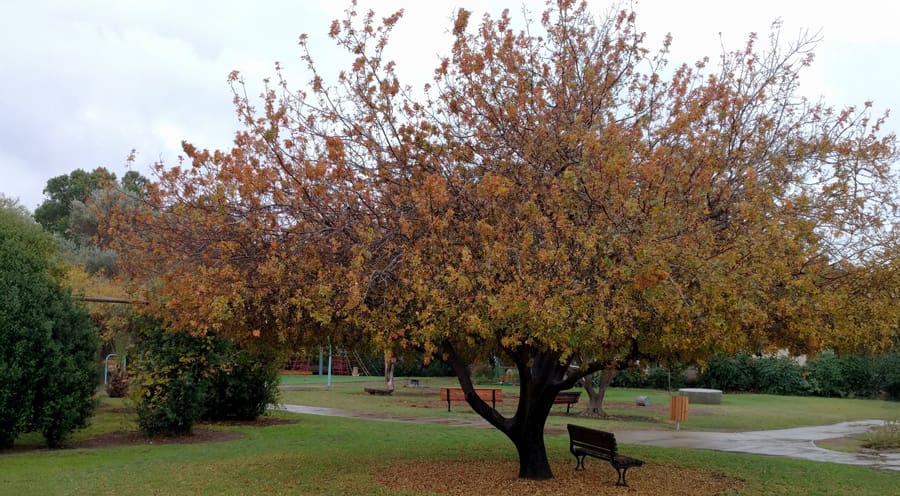
As days shorten and the weather cools, deciduous trees begin their journey toward leaf fall and dormancy. Observing the changing leaf colors and leaf drop, nature teaches us an important life lesson: there is beauty in letting go. The tree does not cling to its final leaves; it releases them to make room for renewal.
Autumn in Israel lasts from September to November. However, thanks to decades of developing exclusive cultivars and working with grafted trees, we have managed to extend the Israeli fall foliage season from November through the end of January, bringing the look of an European autumn, with its prolonged foliage display to the Israeli public. Over this three-month period, deciduous trees present a vivid color spectacle. Our unique patented cultivars and grafted trees serve as high-quality tools for landscape architects and private garden owners, allowing them to design a “foliage symphony” across multiple seasonal layers, both simultaneously and sequentially for a continuous, well-planned display.
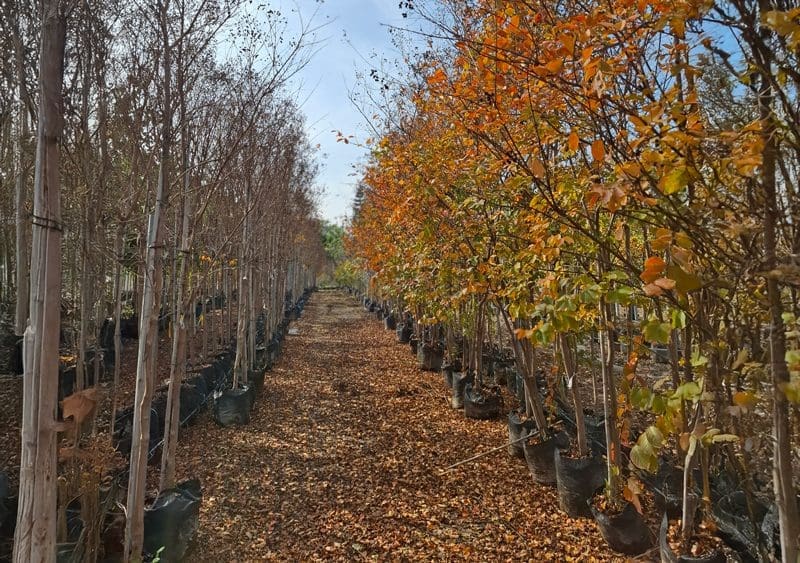
At the first signs of autumn, trees reduce the production of chlorophyll, the pigment responsible for green color. Production slows until it ceases entirely. Concurrently, breakdown processes recycle nutrients within the leaves. Consequently, underlying pigments previously masked by green begin to emerge: yellow hues and spots present all along. Occasionally, red and purplish tones also develop, particularly toward late autumn.
Why would a tree invest energy and resources to grow leaves, only to shed them in winter? In nature, nothing is wasted: a major portion of the energy invested in leaf production is recycled, sending nutrients back into the trunk, roots, and structural tissues. Some are stored in flower buds, which gradually swell; by the time the final leaf falls, the protected tissue hidden inside the bud is complete.
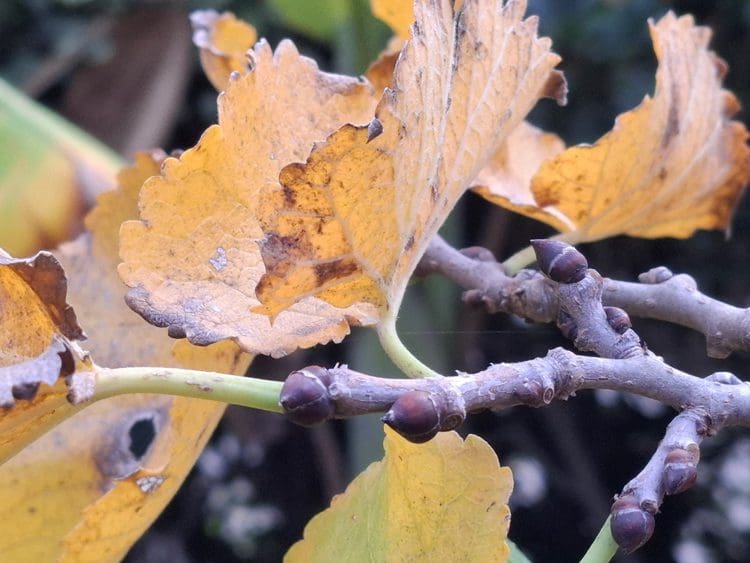
With the first leaf display, the tree works on repairing, upgrading, and expanding its root system. Roots thicken and accumulate starch and minerals from the soil to survive the cold and prepare for spring flushing. Assisting the tree at this stage by lightly incorporating quality compost into the soil helps prepare it for winter and the coming spring.
As autumn progresses and fallen leaves accumulate on the ground, roots undergo lignification beneath the surface, acquiring a dark, protective sealing layer. While this reduces water absorption capacity, it enhances the root’s ability to generate “positive pressure.” This enables the tree to continue pushing water up to its canopy even without leaves present to evaporate water and pull it through transport vessels.
Understanding the importance of positive root pressure underscores the need to maintain soil moisture. In containerized media, this need is heightened. Irrigation should maintain moisture without waterlogging the substrate. When Israeli winters yield sparse rainfall, supplemental watering prevents root zone desiccation.
As temperatures drop further into deep winter, stored root starch breaks down into sugars and moves upward throughout the tree, functioning as a natural antifreeze to protect delicate tissues from frost damage.
With preparation complete, the tree enters dormancy. Bud scales sealed with wax protect embryonic tissues, waiting for the first sign of spring to resume growth.
A common belief holds that gardens remain static in winter, requiring planting to wait until spring. However, dropping autumn temperatures, accompanying rains, and reduced solar radiation favor planting. This is an ideal period to plant trees.
A veteran agronomist once shared a key principle regarding autumn planting: “As long as you can sink a shovel into the ground, it is a good time to plant, provided you plant on a slight mound and maintain positive drainage”.
When late-summer nutrient deficiency signs appear (such as interveinal chlorosis), growers sometimes forgo treatments like iron, assuming the tree will soon enter dormancy. However, knowing that nutrients accumulate in tissues for spring development highlights the importance of year-round supplementation. While foliage may not fully regain a vibrant green before winter, correcting nutrient deficiencies prior to autumn supports both fall color displays and healthy spring growth.
“Chilling units” influence color and serve as the tree’s internal alarm clock. Trees track cold exposure hours and must accumulate sufficient chilling units through autumn and winter. Without adequate chilling, trees struggle to break dormancy, leading to sparse or uneven spring bloom and growth.
The timing and intensity of leaf drop depend on temperature variations across species and cultivars. Trees of the same species may require different chilling totals depending on the specific cultivar.
Despite its compact geography, Israel encompasses distinct climate micro-regions. A tree cultivar planted along the coastal plain displays leaf fall differently than the same cultivar in mountain regions. For example, coastal and lowland areas suit trees such as Chinese tallow (Triadica sebifera), crape myrtle (Lagerstroemia), Chinese pistache (Pistacia chinensis), sweetgum (Liquidambar), callery pear (Pyrus calleryana), as well as cold-sensitive tropical trees like Spathodea, Bolusanthus, and Pongamia. Mountain regions require cultivars adapted to higher chilling requirements rather than heat-loving tropical species.
The right cultivar depends entirely on your geographical location and microclimate. Note that fall foliage timing in the Coastal Plain and Lowlands is delayed compared to the Mountain region, as trees at higher elevations accumulate their “chilling units” much earlier in the season.
This is precisely why we have spent years breeding and selecting specific cultivars capable of delivering a classic European autumn display tailored to each local microclimate.
How do you know which cultivar is right for you? That’s where our expertise comes in. Drawing on years of experience and our extensive selection of tree species and varieties, the fall foliage specialists at Ilan Nurseries will personally match the best trees to your site. Contact us today, and we will ensure you get the exact cultivar to deliver the most breathtaking display for your home or project location.

Beyond routine tree care throughout the year, our lineup of patented and grafted cultivars enables structured planning of autumn foliage sequence in the landscape. Our Lagerstroemia series initiates the autumn display in November alongside Triadica and Liquidambar.
In December, our Fraxinus (ash) selection expands the sequence into January: Fraxinus syriaca ‘Inbali’ and Fraxinus angustifolia ‘Raywood’ open the display, joined mid-December by Fraxinus pennsylvanica ‘Sunrise’. As temperatures fall, colors intensify prior to leaf drop. Fraxinus pennsylvanica ‘Sunset’ follows two weeks later, leading into evergreen ash selections in January. Foliage transitions across yellow, orange, red, and brown tones before Fraxinus ‘Nova’ concludes the sequence in late January.
Ash (Fraxinus) varieties available at the nursery:
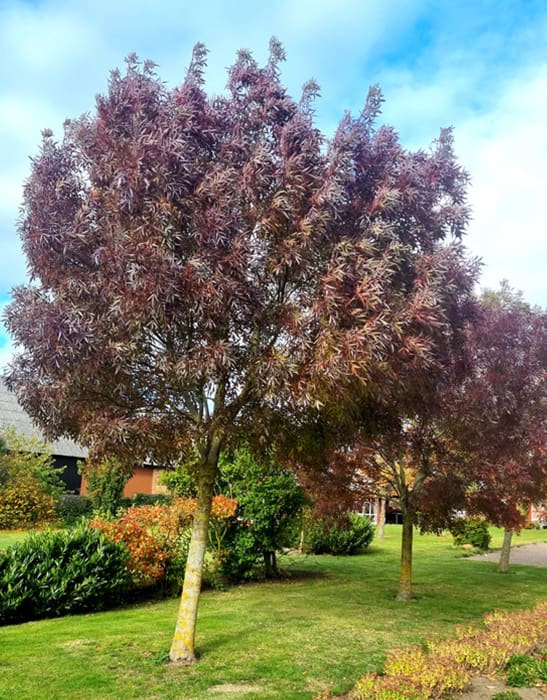
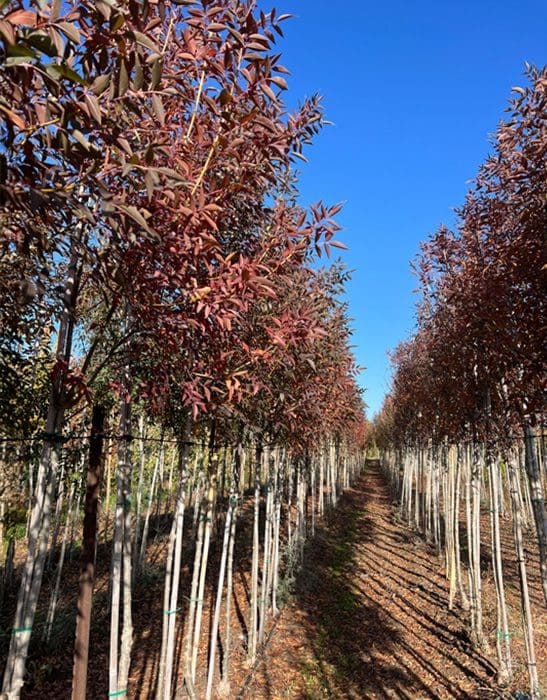
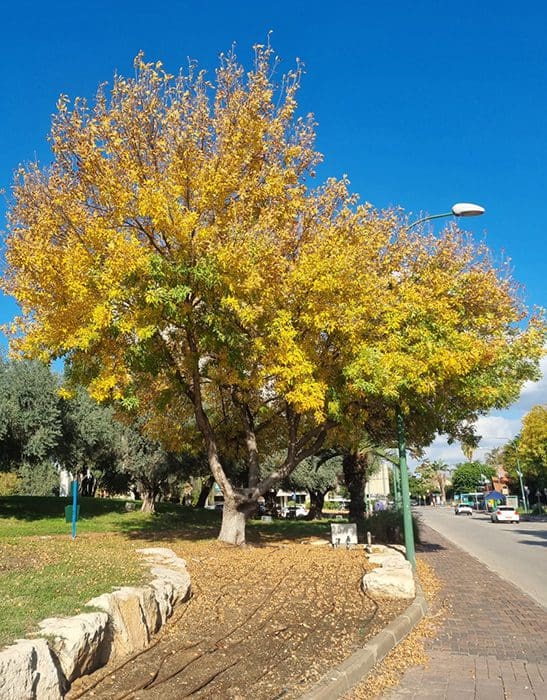
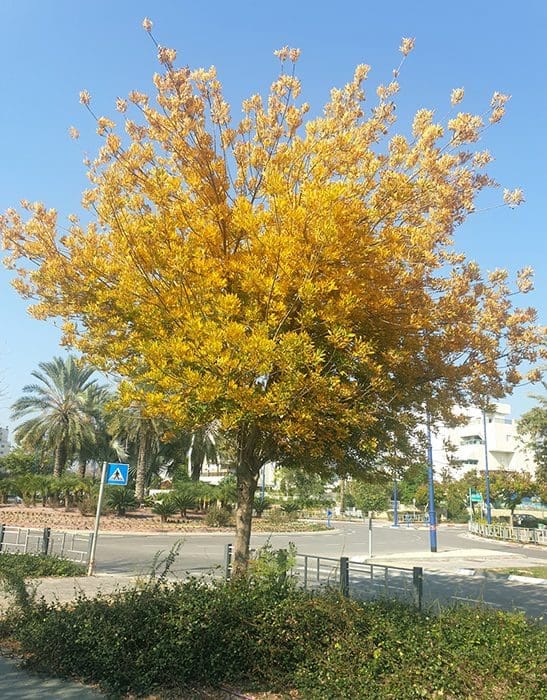
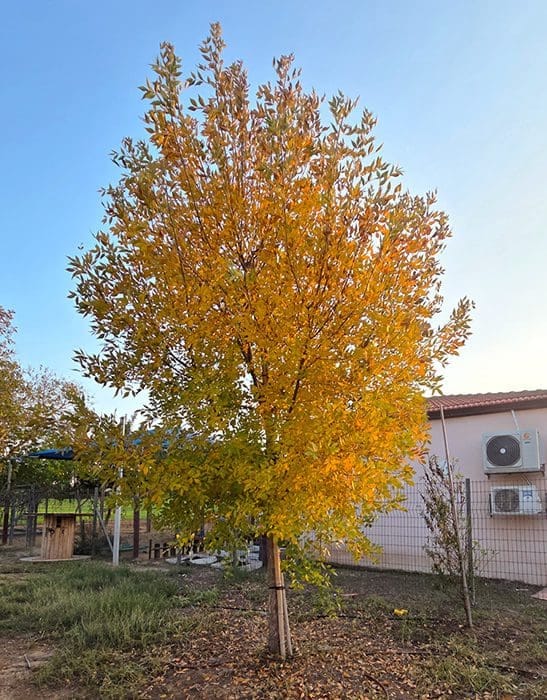
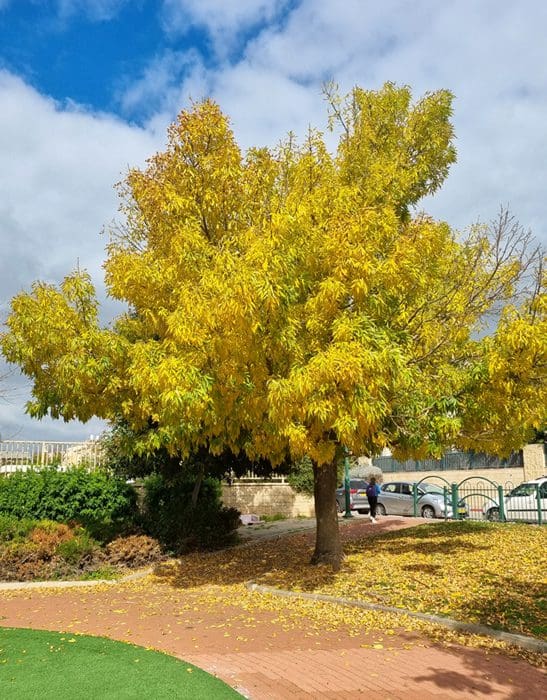
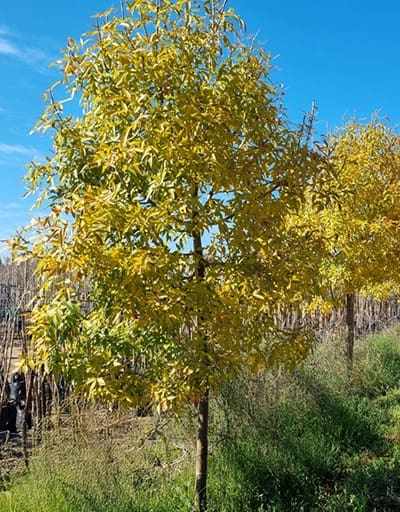
Fall color spectrum across our Fraxinus (Ash) cultivars:




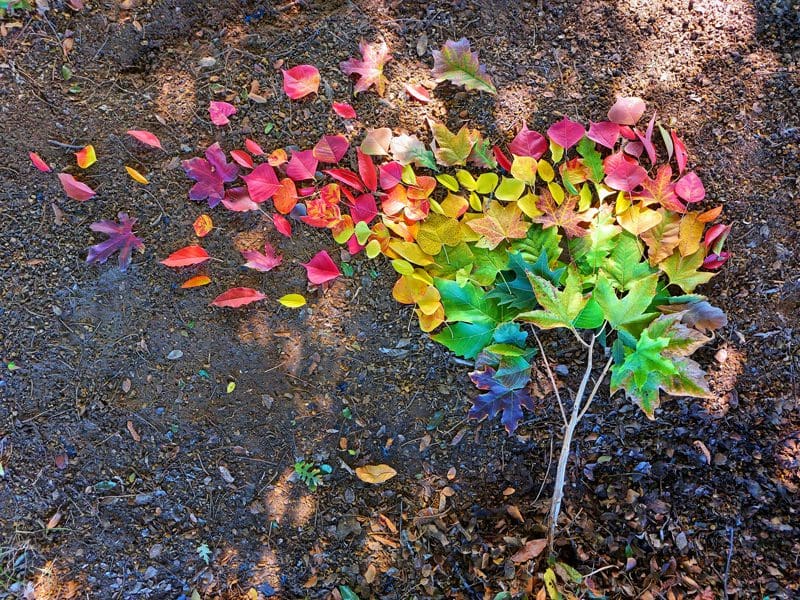
Lagerstroemia ‘Bella Mia’ – The Crimson Queen
The beautiful ‘Bella Mia’ is a patented selection of “Ilan Nurseries.” This cultivar was meticulously selected for its ability to produce an exceptionally intense autumn foliage display. As fall arrives, the vibrant green foliage undergoes a transformation, taking on shades ranging from deep red to purplish-crimson. Because it is a grafted tree, ‘Bella Mia’ guarantees perfect uniformity in both gardens and avenues, a crucial feature for architects seeking a consistent, powerful, and unforgettable presentation.
Liquidambar Fastigiate / Columnar – Vertical Color Accent
As an excellent solution for architects and garden owners dealing with space constraints, we developed an exclusive patented cultivar – the fastigiate Liquidambar. All trees of this cultivar are grafted, ensuring high product uniformity.
Its narrow, upright structure allows it to be planted in narrow passages or as part of a dense avenue. Its star-shaped leaves turn a fiery spectrum of colors, from lemon yellow to orange to a burning red. The Liquidambar is the “Champion of the Lowlands,” proving that selecting the right cultivar delivers a magnificent European fall display even in relatively warm regions.
The Chinese Tallow (Triadica) Collection – The Magic of the Coastal Plain
The Chinese Tallow tree is one of our most popular and reliable trees, especially for the Coastal Plain and Lowland regions. We cultivate outstanding, hand-selected varieties that, at the peak of autumn, transform into glowing “lanterns” of yellow, red, and orange. The Chinese Tallow is wonderfully cooperative; it “knows” how to capitalize on even the subtle temperature shifts to produce a consistent and breathtaking color display, bringing a touch of warmth and beauty to private and public gardens just before winter.
Leading Triadica Selections:
Platanus orientalis ‘Mizrah Star’ – The Orange Shift
A selection of the native Oriental plane tree, ‘Mizrah Star’ transitions into flame-orange and deep red hues rather than the typical yellow-brown fall color of the species, combining structural hardiness with distinct foliage color.
Ulmus ‘Feather Cloud’ – Variegated Lacebark Elm
Ulmus parvifolia ‘Feather Cloud’ features variegated foliage with cream and white margins on green leaves throughout the growing season. As temperatures drop, the variegated leaf sections shift to bright red tones, combining disease resistance with ornamental foliage variation.
Seedling-grown trees of the same species, and even from the same parentage, can produce completely different fall foliage displays.
When it comes to leaf drop and autumn color, we know exactly what to look for: uniformity, vibrant hues, the pace of color transition, and consistency season after season. Every few years, a standout emerges, a single tree with a striking appearance unlike any other of its kind. When we identify a specimen with elite potential, it can become the source material for a new patented cultivar within a few years, leading to whole new generations of trees with extraordinary autumn displays.
Autumn in Israel is no less important than spring. It is long, and with proper planning, it can be breathtaking.
We invite you to explore the fall color gallery on our website. Contact us today to schedule a guided tour of the nursery, and let us help you select the ideal tree for your garden, taste, and landscape needs. Come design your next autumn foliage symphony with us.
Additional articles:




עץ יחיד:
מסנן ומטהר כ-1000 מ”ק אוויר מזיהום
מייצר 700 ק”ג חמצן
קולט מעל 20 טון של פחמן דו חמצני
מסוגל לספוג כ-20 ק”ג אבק בכל שנה
ולבלוע תרחיפים המכילים מתכות רעילות, כמו כספית, עופרת וליתיום
חלק מהחמצן באוויר שאנו נושמים מיוצר על ידי העצים
העצים מכינים עצמם לחורף, שבו פעילותם נעצרת. כדי לא להינזק מפגעי הקור מפחיתים העצים את שטח הפנים, ע”י השלת העלים, כצעד הסתגלותי המאפשר להם לשרוד בתנאי החורף המקשים. הקולטנים שבעלים, הרגישים לטמפ’ היורדת, מפסיקים את ייצור הכלורופיל, הכלורופיל הקיים מתפרק והצבענים האחרים שבעלים נחשפים, והעלים הופכים מירוקים לצהובים, כתומים ואפילו אדומים.
בעת שלכת הסתיו, צבעי השלכת – בעיקר האדום – מאפשרים לעלה להישאר מעט יותר על העץ וכך העץ “שואב” את שארית החומרים המזינים מהעלים ולנצלם עד תום. צבעי שלכת ביערות שלא בעונת הסתיו מאפשרת ליערנים לאתר בעיות.
המלצות ואפשרויות לשילוב שקדים בתפריט היומי:
*תודה לגילי חדש – רפואה טבעית
הפרט המוכר הכי עתיק בעולם הוא עץ מזן Pinus longaeva המוכר בשמותיו העממיים Great Basin bristlecone pine או intermountain bristlecone pine או western bristlecone pine, שנמצא ביער Ancient Bristlecone Pine שב’הרים הלבנים’ בקליפורניה.
גילו מתקרב ל-5,100 שנים!
גם העץ השני בגילו המוכר נמצא באותו יער, והוא גם כן תת זן של אותו עץ. הוא בן יותר מ-4,800 שנה. תת זן זה קיבל מהחוקרים שמדדו את גילו את השם “מתושלח”
הפרט הכי גבוה בעולם הוא כפי הנראה עץ מזן
Sequoia sempervirens
שנמצא בפארק הלאומי רדווד בקליפורניה.
גובהו 115 מטר
גינקו דו אונתי מהווה מעין ‘מאובן חי’. הוא התקיים כבר בתקופות פרהיסטוריות.
בחפירות ארכיאולוגיות נמצאו חלקי מאובנים שלו מלפני 270 מליוני שנים!
עמידותו הרבה, והיכולת להזריע את עצמו בקלות, סייעו לו להתקיים לאורך הדורות. הוא כל כך עמיד, שפרטים בודדים שלו שרדו אפילו את פצצת האטום בהירושימה בשנת 1945, למרות שהיו במרחק קילומטר אחד או שניים בלבד ממוקד הפיצוץ. לא רק שעצים אלה שרדו, הם אףהחלימו לחלוטין לאחר זמן קצר יחסית.