Share:
Share:
Commonly Called: Red Madagascar Almond / Terminalia bentzoë / Madagascar Almond.
Origin: Madagascar; currently widespread in tropical and subtropical landscaping
Description: Semi-deciduous to conditionally deciduous, medium-sized tree
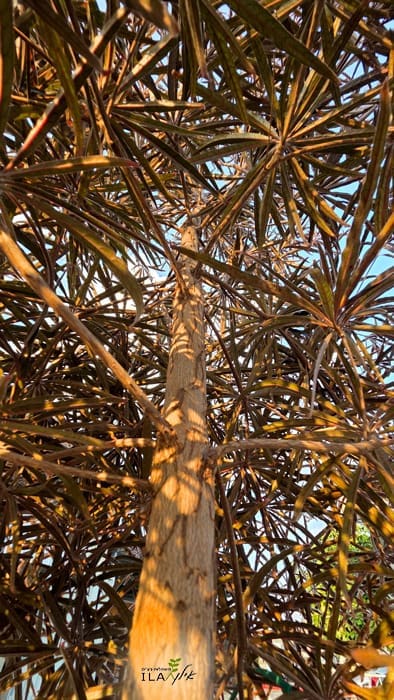
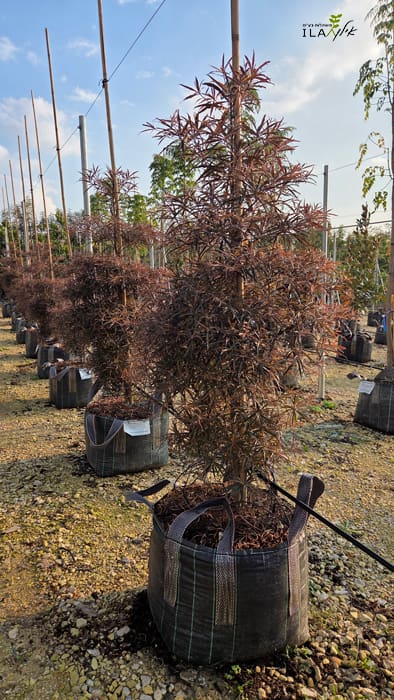
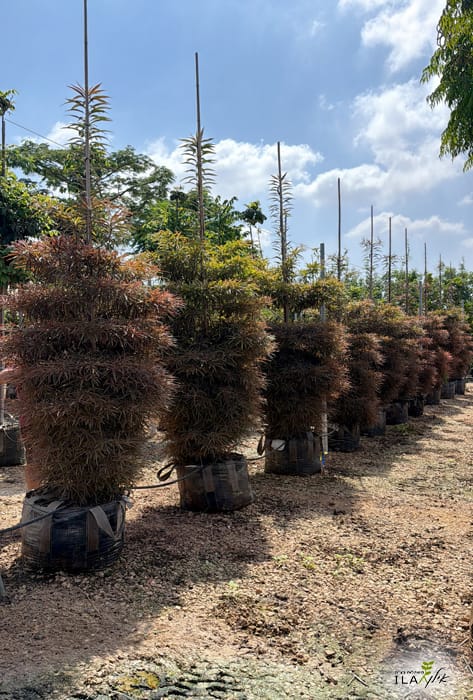
Growth Habit: Apically dominant with an upright trunk and horizontal branches in dense, layered tiers forming a pyramidal structure.
Height at Maturity: 8 – 15 meters or 26.2 – 49.2 ft
Diameter at Maturity: 4 – 6 meters or 13.1 – 19.6 ft
Growing Speed: Moderate
Irrigation: Regular watering during the first few years; once established, relatively drought-tolerant, though responds well to supplemental irrigation.
Soil: Light or nutrient-rich, well-drained soil; sensitive to excess salinity.
Climatic Adaptability: Ideal for tropical-subtropical climates, coastal areas, and lowlands; heat-loving, sensitive to frost.
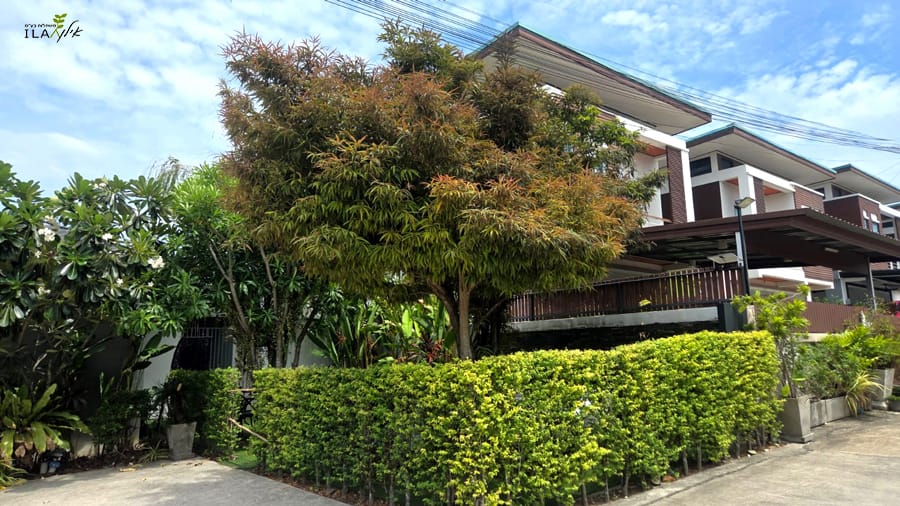
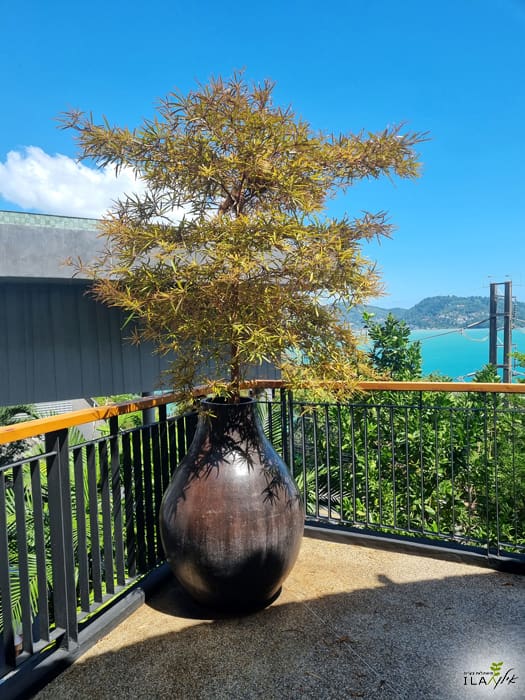
Primary Uses: Elegant or luxury patios, private gardens, median strips, indoor/atrium spaces.

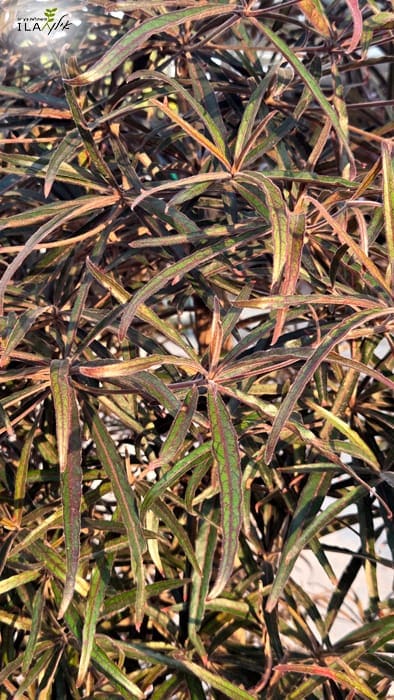
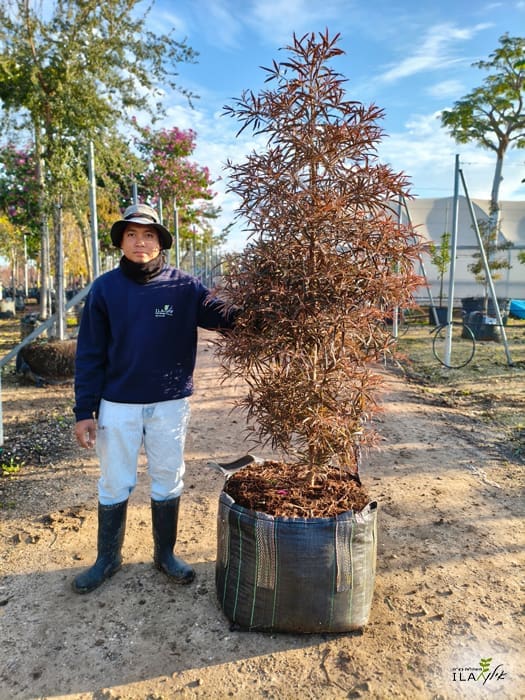
The Red Madagascar Almond (Terminalia bentzoë) is a medium-sized tropical tree native to Madagascar. It is an impressively structured, architectural tree with strong apical dominance characteristic of the Terminalia species, particularly in its youth. Its trunk is smooth, and its horizontal branches grow in tiered layers called “whorls,” creating a dense, pyramidal form clad in soft, velvety foliage. In full sun, the tree puts on a eye-catching show of delicate foliage in glowing red and subtle green tones arranged in a crown-like pattern. Without sufficient sunlight, the foliage shifts to a predominantly green color, while excess water causes yellowing leaves, a clear sign of nutrient deficiency or stress.
This tree is ideally suited to tropical–subtropical climates and warm regions along the Coastal Plain and Lowlands. It handles urban microclimates and mild coastal exposure well, thriving in well-drained soils free from hard frosts. It prefers rich, well-aerated soil mixes or garden beds with generous root space, though it has low-to-moderate tolerance for soil or water salinity and is not recommended for immediate beachfront exposures (first line to the sea).
Its growth rate is moderate, accelerating as the tree matures and establishes. It requires regular watering during its initial years, after which it becomes relatively water-wise.
Propagation is done via grafting, making this cultivar a unique and likely newly introduced clone. It should be treated as such, as there is not yet long-term documentation of mature specimens reaching the large dimensions or full characteristics of its relatives in the Terminalia mantaly family. We cultivate two of these relatives at our nursery: the classic, widely known Terminalia mantaly, and Terminalia ‘Tornado’ – our pride and joy, which is part of our proprietary, patented cultivar collection developed here at Ilan Nurseries Ltd.
The distinctly layered structure of the Red Madagascar Almond allows for sleek, uniform tree rows that cleanly define axes, walkways, and open-air seating areas. The reddish-green foliage intensifies under full sun, beautifully pairing a sophisticated color palette with a clean, orderly canopy throughout the season.
Combining a precise architectural silhouette, dynamic foliage color, and environmental resilience, this tree serves as a striking centerpiece for modern, commercial, and residential landscape projects. It is most commonly used in patios or as a focal tree in both small and large gardens, and as it proves its performance in local conditions alongside its relatives, its use across the landscape industry is bound to grow
Additional trees from the same family: Terminalia catappa (Sea Almond) | Terminalia mantaly | Terminalia mantaly ‘Tornado’ | Terminalia mantaly ‘Red’
עץ יחיד:
מסנן ומטהר כ-1000 מ”ק אוויר מזיהום
מייצר 700 ק”ג חמצן
קולט מעל 20 טון של פחמן דו חמצני
מסוגל לספוג כ-20 ק”ג אבק בכל שנה
ולבלוע תרחיפים המכילים מתכות רעילות, כמו כספית, עופרת וליתיום
חלק מהחמצן באוויר שאנו נושמים מיוצר על ידי העצים
העצים מכינים עצמם לחורף, שבו פעילותם נעצרת. כדי לא להינזק מפגעי הקור מפחיתים העצים את שטח הפנים, ע”י השלת העלים, כצעד הסתגלותי המאפשר להם לשרוד בתנאי החורף המקשים. הקולטנים שבעלים, הרגישים לטמפ’ היורדת, מפסיקים את ייצור הכלורופיל, הכלורופיל הקיים מתפרק והצבענים האחרים שבעלים נחשפים, והעלים הופכים מירוקים לצהובים, כתומים ואפילו אדומים.
בעת שלכת הסתיו, צבעי השלכת – בעיקר האדום – מאפשרים לעלה להישאר מעט יותר על העץ וכך העץ “שואב” את שארית החומרים המזינים מהעלים ולנצלם עד תום. צבעי שלכת ביערות שלא בעונת הסתיו מאפשרת ליערנים לאתר בעיות.
המלצות ואפשרויות לשילוב שקדים בתפריט היומי:
*תודה לגילי חדש – רפואה טבעית
הפרט המוכר הכי עתיק בעולם הוא עץ מזן Pinus longaeva המוכר בשמותיו העממיים Great Basin bristlecone pine או intermountain bristlecone pine או western bristlecone pine, שנמצא ביער Ancient Bristlecone Pine שב’הרים הלבנים’ בקליפורניה.
גילו מתקרב ל-5,100 שנים!
גם העץ השני בגילו המוכר נמצא באותו יער, והוא גם כן תת זן של אותו עץ. הוא בן יותר מ-4,800 שנה. תת זן זה קיבל מהחוקרים שמדדו את גילו את השם “מתושלח”
הפרט הכי גבוה בעולם הוא כפי הנראה עץ מזן
Sequoia sempervirens
שנמצא בפארק הלאומי רדווד בקליפורניה.
גובהו 115 מטר
גינקו דו אונתי מהווה מעין ‘מאובן חי’. הוא התקיים כבר בתקופות פרהיסטוריות.
בחפירות ארכיאולוגיות נמצאו חלקי מאובנים שלו מלפני 270 מליוני שנים!
עמידותו הרבה, והיכולת להזריע את עצמו בקלות, סייעו לו להתקיים לאורך הדורות. הוא כל כך עמיד, שפרטים בודדים שלו שרדו אפילו את פצצת האטום בהירושימה בשנת 1945, למרות שהיו במרחק קילומטר אחד או שניים בלבד ממוקד הפיצוץ. לא רק שעצים אלה שרדו, הם אףהחלימו לחלוטין לאחר זמן קצר יחסית.